




The digital transformation of the tourism sector is a priority for Smart Tourist Destinations (STDs). STDs are those that use information and communication technologies (ICT) to improve the competitiveness and sustainability of their tourism offerings.
One of the keys to the digital transformation of SDTs is semantics. Semantics is the study of the meaning of concepts and the relationships between them. In the context of tourism, semantics allows us to understand the meaning of tourism data and the relationships between them. In addition, by having standardized semantics and data structures, different destinations can collaborate with each other and with entities both below and above them at the municipal level.
The conceptual reference model for the development of a Tourism Sector Ontology Network, developed by SEGITTUR, is an important step forward in the application of semantics in Smart Tourist Destinations. This model provides a common conceptual structure for representing tourism data.
SEGITTUR’s reference ontological model identifies 260 classes, properties, and relationships that describe the key elements of tourism. These classes are grouped into 12 main classes, representing the following key elements:
- Tourism organizations: companies, associations, public institutions, etc.
- Tourism products and services: accommodation, transportation, activities, etc.
- Tourist destinations: regions, cities, towns, etc.
- Tourists: people traveling for pleasure or business.
- Means of payment: credit cards, debit cards, cash, etc.
The application of SEGITTUR’s ontological reference model has several benefits for DTIs. It enables interoperability between different tourism information systems. It facilitates the creation of personalized tourism services tailored to user needs. And it can help improve the efficiency and sustainability of DTIs.
The application of semantics in DTIs is an opportunity for the digital transformation of the tourism sector. Semantics allows us to understand the meaning of tourism data and the relationships between them. This can help DTIs offer more personalized, efficient, and sustainable tourism services.
Some examples of how semantics can be applied to DTI:
- Personalization of the tourist experience: Semantics can be used to create personalized tourism services based on travelers’ interests and preferences. A DTI could use semantics to recommend tourist activities to travelers based on their demographics, interests, and travel history.
- Improving the efficiency of tourism processes: Semantics can be used to improve the efficiency of tourism processes. Semantics could be used to automate tasks such as booking accommodation or purchasing airline tickets.
- Increasing the sustainability of SDTs: Semantics can be used to increase the sustainability of SDTs. For example, an SDT could use semantics to optimize the use of tourism resources, such as water or energy.
Semantics in smart tourism destinations (SDTs) plays a crucial role in the digital transformation of the tourism sector. It is not simply a trend, but an essential tool that allows cities and destinations to decode and better understand the vast amount of data related to tourism. By leveraging this tool, SDTs, such as those proposed by the SEGITTUR ontological model, can adapt and customize their tourism offerings based on accurate insights into visitor preferences and behaviors.
This adaptation not only increases competitiveness, making destinations more attractive to tourists, but also promotes more sustainable strategies. By better understanding and responding to tourists’ needs, DTIs can optimize the use of resources, efficiently manage visitor flows, and ultimately ensure a tourism experience that benefits both visitors and the local community in the long term.
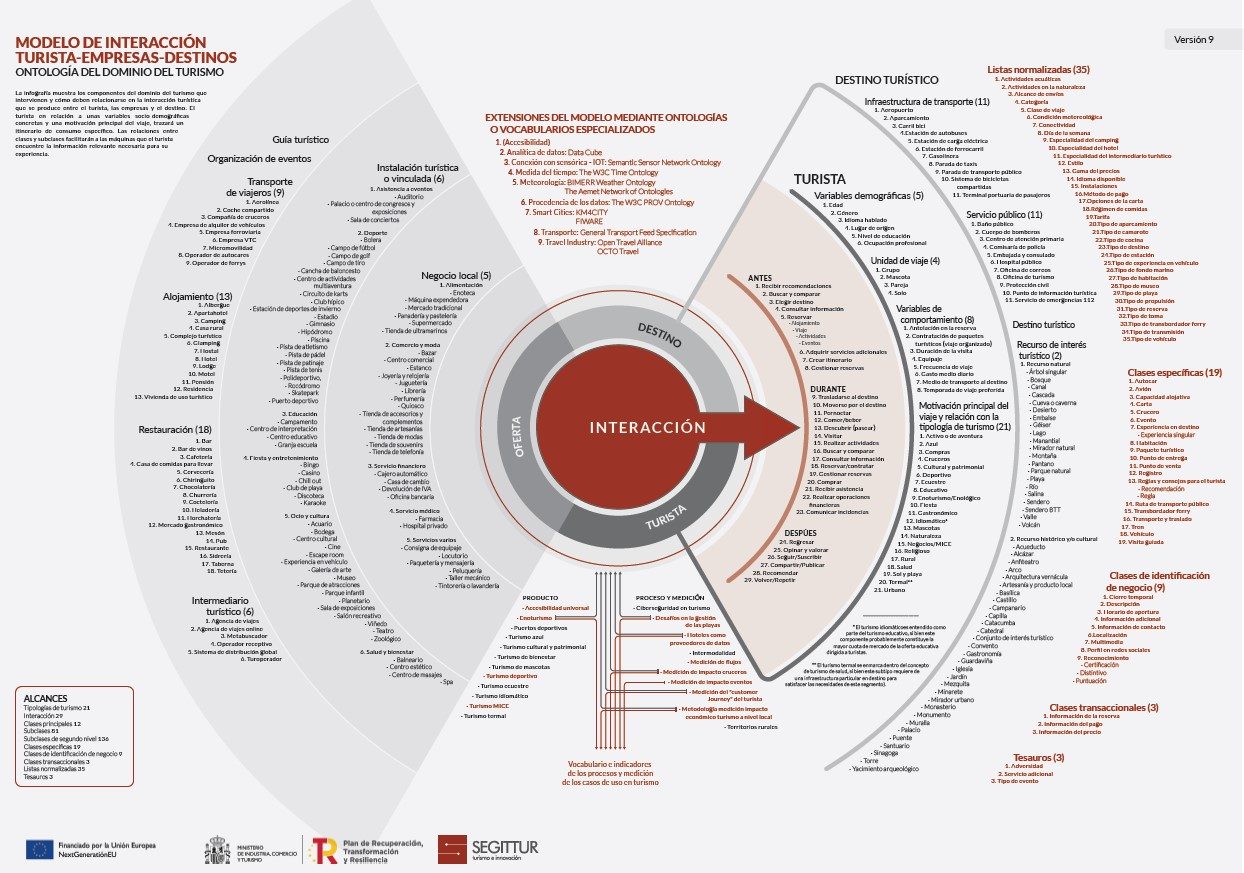
Sources: SEGITTUR